
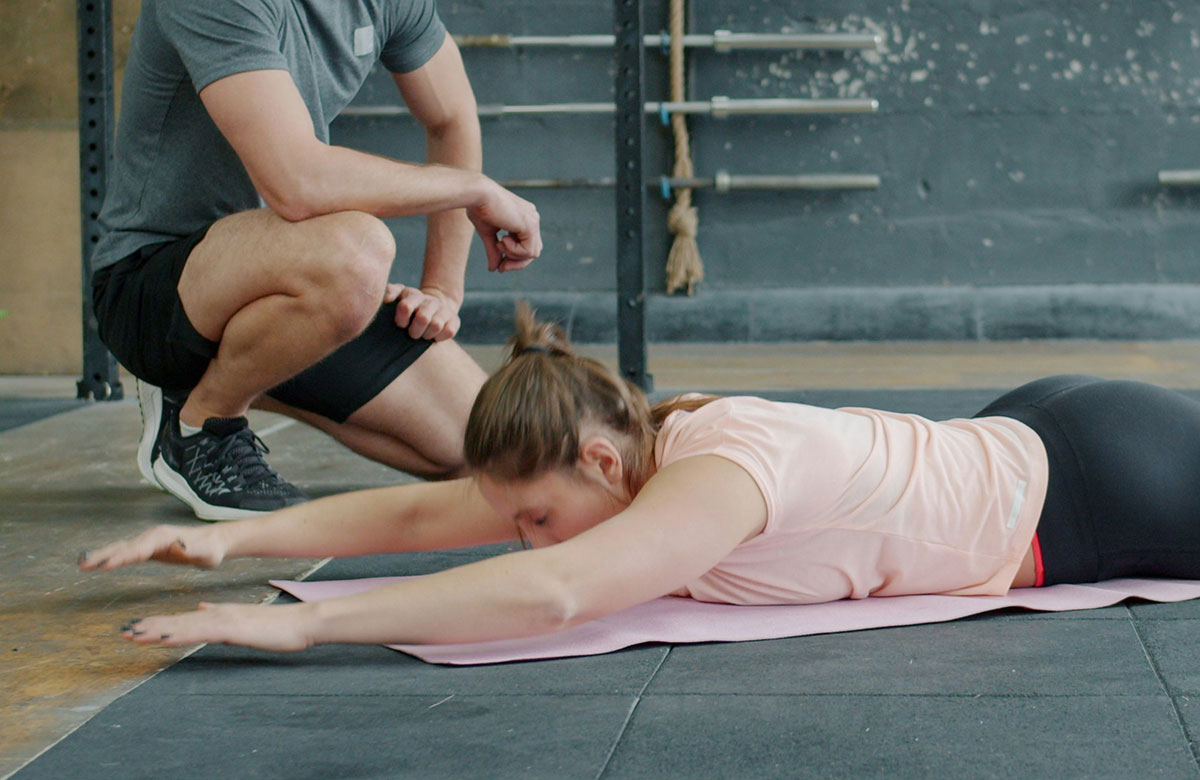
DOMS or Injury? How Can You Tell the Difference?
You finish a hard gym session, a demanding training session or a longer run and wake up the next morning aching. Is it simply normal post-exercise soreness, or have you actually injured something?
Sometimes the difference is obvious. Other times it is not. However, when the pain started, how it feels and what you can still do can provide some useful clues.
What is DOMS?
DOMS stands for delayed onset muscle soreness. It commonly develops after exercise that is harder or different from what your body is accustomed to, particularly exercise involving eccentric muscle contractions – where a muscle is working while lengthening, such as lowering a weight, running downhill or controlling the descent of a squat. 1
Unlike an acute injury, DOMS usually does not appear suddenly during the exercise itself. Soreness develops afterwards and is often most noticeable over the following 24–72 hours. 1
DOMS can cause:
- a dull muscular ache;
- stiffness or tenderness;
- temporary reduction in movement;
- temporary reduction in strength;
- soreness when the affected muscles are used.
It is also worth dispelling an old myth: DOMS is not caused by lactic acid remaining in your muscles after exercise. Research has shown that the rise and fall of blood lactate does not correspond with the delayed soreness that occurs afterwards. 1
What might suggest an injury instead?
An acute muscle injury may be more likely when pain begins suddenly during a particular movement or effort, particularly if it is localised and affects normal function.2 For example, you might feel a sudden pull in your hamstring while sprinting, pain in your calf while accelerating, or a sharp pain during a heavy lift.
Features that deserve more attention include:
- sudden or sharp pain during activity;
- pain concentrated in one particular area;
- a noticeable loss of strength or function;
- swelling or bruising;
- difficulty walking or using the affected area normally;
- pain that continues to worsen rather than gradually settling.
However, not every muscle injury produces a dramatic moment when you immediately know something has happened. Symptoms and physical assessment need to be considered together, and sometimes further investigation may be appropriate. 2
DOMS or injury: a useful rule of thumb
DOMS: “Yesterday I trained harder than usual and today the muscles I worked are stiff and aching.”
Possible injury: “I felt pain during training and now one particular area hurts or isn’t working normally.”
This distinction is not a diagnostic test, but it can be a useful starting point.
What should you do if it is DOMS?
DOMS normally settles as the muscles recover. You do not necessarily need to stop moving completely. If movement feels comfortable, gentle activity and temporarily reducing the intensity of your training may be reasonable while the soreness settles.3
Massage may reduce the feeling of post-exercise muscle soreness for some people, although no recovery technique should be viewed as a magic cure. 3
Foam rolling can also be useful for some people. A 2024 systematic review and meta-analysis found that foam rolling reduced post-exercise muscle soreness, with the effects becoming more apparent from around 24 hours after exercise.4
However, the research mainly measures outcomes such as soreness and pain sensitivity. Foam rolling is therefore better regarded as something that may make DOMS feel more comfortable, rather than something proven to accelerate muscle-tissue repair. 4
Foam rolling should also feel tolerable. Aggressively rolling an area that is sharply painful, significantly swollen, bruised or potentially injured is unlikely to be sensible.
Stretching is also frequently recommended for DOMS, but research suggests that stretching before or after exercise has little meaningful effect on the amount of soreness experienced afterwards.5
Can you train with DOMS?
With mild soreness, you may still be able to exercise, particularly if you reduce the load or train something different.
However, if soreness is substantially affecting your strength, movement or technique, another hard session for the same muscles may not be the sensible option. Allowing some recovery and then gradually returning to normal training may be more appropriate than repeatedly pushing through significant soreness.
When should you get it assessed?
If you are unsure whether pain is normal post-exercise soreness or an injury, an assessment can help establish what is most likely happening and whether treatment, rehabilitation or changes to training are appropriate.
An osteopathic assessment can include looking at how the area moves, testing strength and examining the affected area and surrounding muscles and joints. Where necessary, referral for further medical investigation can also be recommended.
Following an injury, the NHS advises contacting NHS 111 or an urgent treatment service if the pain is very severe or worsening, there is a large amount of swelling or bruising, you cannot put weight through the area or it is very difficult to move.6
More urgent assessment at A&E is advised if the injured body part has changed shape, becomes numb or develops tingling or pins and needles, or the skin changes colour or feels cold. 6
The important point is that being sore after exercise does not automatically mean you are injured – but not every pain after exercise should simply be dismissed as DOMS either.
Frequently asked questions
How long does DOMS normally last?
DOMS is usually most noticeable during the first few days following unfamiliar or demanding exercise and then gradually settles. Pain that continues to worsen, persists unexpectedly or significantly affects normal function deserves further assessment.
Is DOMS a sign that I have had a good workout?
Not necessarily. Research has shown that the amount of soreness experienced after eccentric exercise is a poor indicator of the amount of exercise-induced muscle damage and inflammation.
The amount of soreness you experience should therefore not be used as a measure of how much exercise-induced muscle damage has occurred. Feeling particularly sore does not necessarily mean that greater muscle damage has taken place.7
Should I exercise if I have DOMS?
Mild DOMS does not necessarily mean you need complete rest. You may be able to train at a lower intensity or exercise another area.
If soreness is significantly altering your strength, movement or technique, allowing more recovery before heavily loading the same muscles may be sensible.
Does foam rolling help DOMS?
It may help. A 2024 systematic review and meta-analysis found that foam rolling may reduce the feeling of muscle soreness after demanding exercise.
However, it is better regarded as a way of potentially making soreness more comfortable rather than a treatment proven to speed muscle-tissue repair.
Does stretching get rid of DOMS?
Probably not to any meaningful degree. A Cochrane review found that stretching performed before or after exercise produced little or no clinically important reduction in subsequent muscle soreness.
When should muscle soreness worry me?
Pain that begins suddenly during exercise, significant swelling or bruising, marked weakness, inability to use the area normally, or pain that is worsening rather than settling may suggest something more than normal DOMS and should prompt appropriate assessment.
If an injured area becomes numb or develops tingling, changes shape, changes colour or feels unusually cold, seek urgent medical assessment as advised by the NHS.

Not sure if it’s DOMS or an injury?
If muscle pain is affecting your training, work or everyday activities, learn more about sports injury treatment in Orpington or book an appointment for an individual assessment. The aim is to understand what’s causing your symptoms and help you return to activity with confidence.
About the author
David Hanaie M.Ost is a Registered Osteopath and founder of Resilience Osteopathy in Orpington. He regularly assesses patients with foot, ankle, knee and lower limb conditions, helping them identify the underlying causes of pain and return to activity with confidence through evidence-informed osteopathic care and rehabilitation.
References
- Cheung K, Hume P, Maxwell L. Delayed onset muscle soreness: treatment strategies and performance factors. Sports Med. 2003;33(2):145-164. doi:10.2165/00007256-200333020-00005. ↩︎
- Mueller-Wohlfahrt HW, Haensel L, Mithoefer K, Ekstrand J, English B, McNally S, et al. Terminology and classification of muscle injuries in sport: the Munich consensus statement. Br J Sports Med. 2013;47(6):342-350. doi:10.1136/bjsports-2012-091448. ↩︎
- Dupuy O, Douzi W, Theurot D, Bosquet L, Dugué B. An evidence-based approach for choosing post-exercise recovery techniques to reduce markers of muscle damage, soreness, fatigue, and inflammation: a systematic review with meta-analysis. Front Physiol. 2018;9:403. doi:10.3389/fphys.2018.00403. ↩︎
- Zhou J, Jia D, Mao J, Xu Y. Preventive effect of foam rolling on muscle soreness after exercise: a systematic review and meta-analysis. J Bodyw Mov Ther. 2024;40:1890-1898. doi:10.1016/j.jbmt.2024.10.009. ↩︎
- Herbert RD, de Noronha M, Kamper SJ. Stretching to prevent or reduce muscle soreness after exercise. Cochrane Database Syst Rev. 2011;(7):CD004577. doi:10.1002/14651858.CD004577.pub3. ↩︎
- NHS. Sprains and strains [Internet]. London: NHS; 2024 [cited 2026 Aug 17]. Available from: https://www.nhs.uk/conditions/sprains-and-strains/ ↩︎
- Nosaka K, Newton M, Sacco P. Delayed-onset muscle soreness does not reflect the magnitude of eccentric exercise-induced muscle damage. Scand J Med Sci Sports. 2002;12(6):337-346. doi:10.1034/j.1600-0838.2002.10178.x.
Why people choose Resilience Osteopathy

Considered
local osteopathic care
Your symptoms, concerns, work, sport and daily activity all matter. Care is tailored to you and your individual goals.

Hands-on
osteopathic treatment
Treatment may include hands-on techniques to support comfort, mobility and movement, depending on your assessment findings.

Read about
sports injury treatment
Find out more about osteopathic care for sports injuries in Orpington and what treatment may include.

Assessment and diagnosis
where appropriate
Your appointment includes a case history and physical assessment to help understand what may be contributing to your symptoms.