
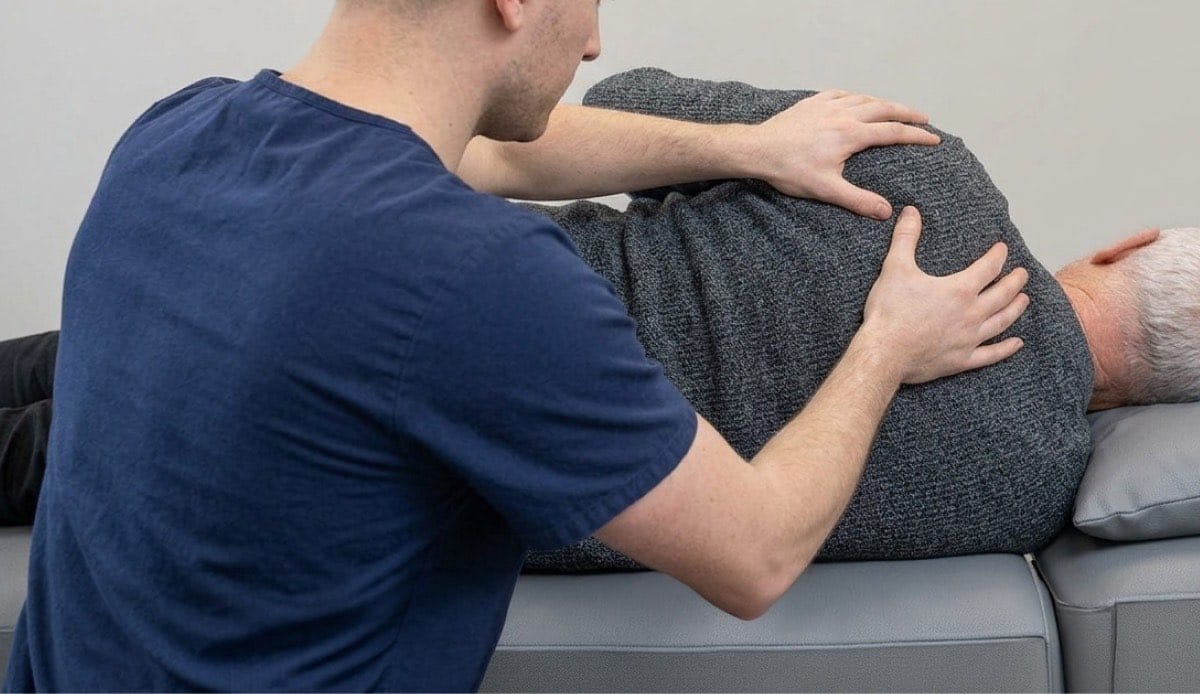
Shoulder pain
Appointment-only assessment and treatment for shoulder pain, stiffness, upper back tension and restricted shoulder movement with a registered osteopath in Orpington.
- Shoulder pain
Pain, aching or discomfort around the shoulder, upper arm, neck or upper back during movement or activity. - Shoulder stiffness
Reduced movement, tightness or restriction that may affect lifting, reaching, dressing or sleeping. - Pain with lifting
Shoulder discomfort that may appear during lifting, carrying, pushing, pulling, gym training or work tasks. - Activity-related pain
Symptoms linked with sport, exercise, desk work, repeated movements, posture or changes in activity levels.
Osteopathic care for shoulder pain in Orpington
Shoulder pain can affect lifting, reaching, dressing, sleeping, driving, working, gym training, sport and everyday movement. Some people notice shoulder pain after an injury, strain, fall, awkward movement or increase in activity. Others develop aching, stiffness or discomfort gradually over time.
Shoulder pain may be linked with the shoulder joint itself, surrounding muscles, tendons, neck pain or stiffness, upper back, ribs, posture, movement habits or previous injury. Symptoms may feel sharp, aching, stiff, tight, weak, restricted or uncomfortable during movement, loading or prolonged positions.
At Resilience Osteopathy in Orpington, care begins with a clear assessment to understand your symptoms, how they started, what affects them and what may be contributing to the problem. Treatment is tailored to you and may include hands-on osteopathic care, movement advice, load management and rehabilitation exercises where appropriate.
How osteopathy may help
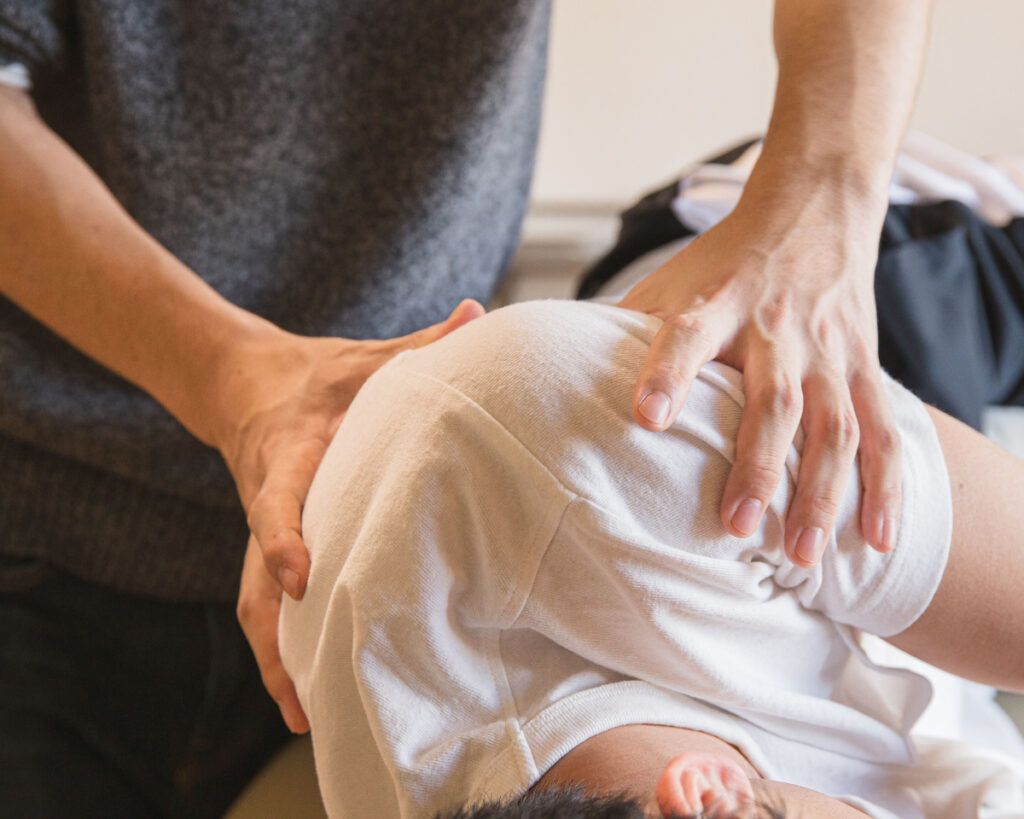
Osteopathic care looks at how your shoulder, neck, upper back, ribs, muscles, joints, posture and movement habits may be contributing to your symptoms. The aim is to understand the bigger picture, rather than only focusing on the painful area.
Your appointment may include hands-on osteopathic treatment to support mobility and comfort, along with advice to help you manage symptoms between appointments. Where appropriate, you may also be given rehabilitation exercises to support movement, strength, control and confidence.
Treatment is always based on your assessment findings, symptoms, goals and general health. If your symptoms suggest that medical review or further investigation is needed, you will be advised appropriately.
What to expect at your appointment

Case history
We discuss your symptoms, health history, work, activity levels, previous injuries and what you want to get back to

Assessment
Your shoulder movement and strength, along with your neck, upper back and other relevant areas, may be assessed to help understand your symptoms

Treatment and advice
Where appropriate, care may include hands-on treatment, movement advice and tailored exercises to support recovery
Support for everyday life, work and sport
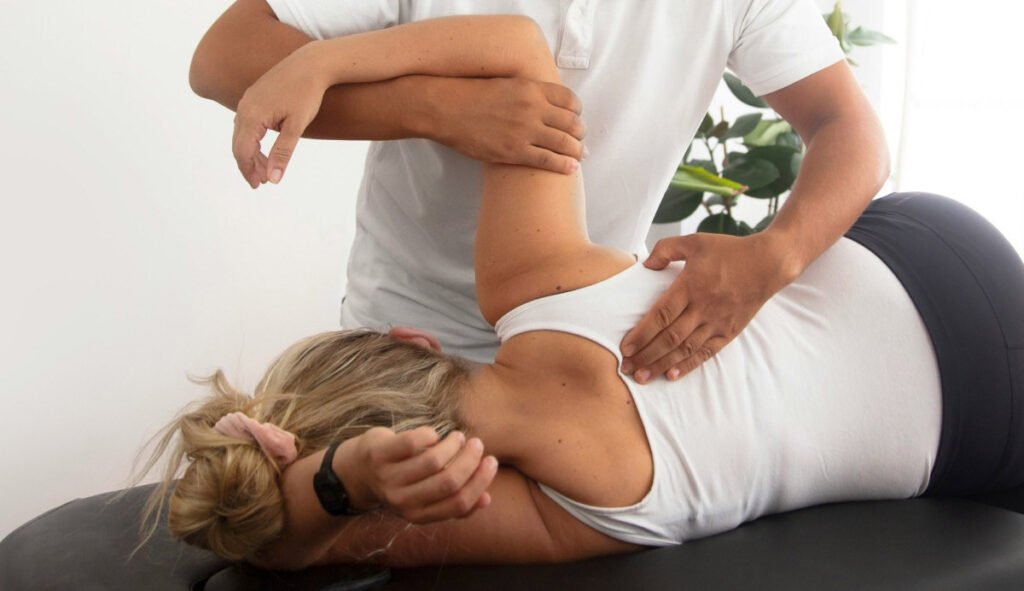
Shoulder pain can affect people in different ways. For some, it may make reaching, lifting, sleeping, desk work or driving more difficult. For others, it may interfere with gym training, rugby, tennis, swimming, manual work or returning to activity after injury.
Resilience Osteopathy supports people in Orpington who want clear advice, practical treatment and a plan that fits their lifestyle. The aim is to help you understand your symptoms, move more confidently and return to everyday activity, work or sport in a realistic way.
Why people choose Resilience Osteopathy

Patient-centred
care in Orpington
Your symptoms, concerns, work, sport and daily activity all matter. Care is tailored to you and your individual goals.

Hands-on
osteopathic treatment
Treatment may include hands-on techniques to support comfort, mobility and movement, depending on your assessment findings.

Support through
exercise
You may be given simple rehabilitation exercises or movement advice to help support recovery between appointments.

Regulated
osteopathic care
Osteopathy is a regulated healthcare profession in the UK, supported by assessment, clinical reasoning and clear communication.
I attended David’s clinic with stiff and sore shoulders and neck which I’d suffered with for some time, leading to migraines – especially at night.
He quickly diagnosed issues relating to my spine and ribs, caused by tension and poor breathing.
During the course of several visits David gradually treated the problem and provided advice to manage the issue between sessions. My neck and back are now so much better, to the extent that my migraines have all but disappeared.
David is thorough, friendly and patient – I highly recommend him.
Ian Google Review
Common questions
What can cause shoulder pain?
Shoulder pain can have a number of possible causes. Symptoms may develop after an injury, fall, heavy lifting, repeated activity or a change in training or workload. In other cases, shoulder pain develops gradually without one obvious event.
Problems involving the muscles, tendons and joints around the shoulder can contribute to pain and restricted movement. Pain around the shoulder does not always come directly from the shoulder joint itself, as the neck, upper back, ribs and surrounding muscles can sometimes contribute to symptoms around the shoulder or upper arm.
An assessment can help establish what may be contributing to your symptoms and whether treatment, rehabilitation or further investigation may be appropriate.
Can osteopathy help with shoulder pain?
Osteopathic care may be helpful for some types of musculoskeletal shoulder pain, stiffness and movement-related discomfort.
Your appointment begins with an assessment of your symptoms, shoulder movement and strength, as well as other areas that may be relevant such as your neck, upper back and ribs.
Where appropriate, treatment may include hands-on techniques to support comfort and movement, together with advice about activity, loading and rehabilitation exercises.
The approach will depend on what is found during your assessment. Some shoulder problems may require imaging, medical management or specialist assessment, and if this appears necessary it will be discussed with you.
Can shoulder pain come from the neck or upper back?
Yes. Pain felt around the shoulder does not always originate from the shoulder itself.
Problems affecting the neck can sometimes produce pain around the shoulder blade, shoulder or arm. Muscles and joints around the upper back, ribs and shoulder blade may also influence how the shoulder feels and moves.
This is why an osteopathic assessment may involve examining your neck, upper back, ribs and shoulder blade movement as well as the shoulder itself.
Do I need an X-ray, ultrasound or MRI for shoulder pain?
Not everyone with shoulder pain needs a scan.
In many cases, your history and physical examination provide useful information about what may be contributing to your symptoms. Imaging may become appropriate following significant trauma, substantial weakness or loss of movement, symptoms that are not progressing as expected, or when the assessment suggests further investigation may be needed.
Different types of imaging provide different information. If your assessment suggests that imaging or medical review would be appropriate, this will be explained to you and you can be directed towards the appropriate healthcare service.
Should I rest my shoulder or keep moving it?
Complete rest is not usually necessary for most uncomplicated shoulder problems.
Keeping the shoulder gently moving within a comfortable range may be helpful, while temporarily reducing or modifying movements that significantly aggravate your symptoms.
This does not necessarily mean stopping work, exercise or sport completely. Depending on the problem, it may be possible to adjust lifting, exercise range, training volume or other activities while the shoulder settles.
Your assessment can help determine which activities are reasonable to continue and whether rehabilitation exercises may help you gradually return to normal activity.
How long does shoulder pain take to improve?
There is no single recovery time for shoulder pain.
A relatively minor muscular or joint irritation may begin to improve fairly quickly, while tendon problems, significant injuries and conditions such as frozen shoulder can take considerably longer.
Recovery may also depend on how long the symptoms have been present, the underlying cause, your general health, work or sporting demands, previous injuries and how the shoulder responds as activity is gradually increased.
Your progress can be reviewed over time and your treatment, rehabilitation and activity advice adjusted according to how you are responding.
Shoulder feeling tight as well as painful?
Read our guide to why muscles can feel tight, when stretching may help and when recurring tightness may be worth getting checked.

Book shoulder pain treatment appointment in Orpington
If shoulder pain, stiffness or movement-related discomfort is affecting how you move, work, train or manage everyday life, contact Resilience Osteopathy to arrange an appointment.
Appointments are available by prior booking only.
Private Medical Insurance