
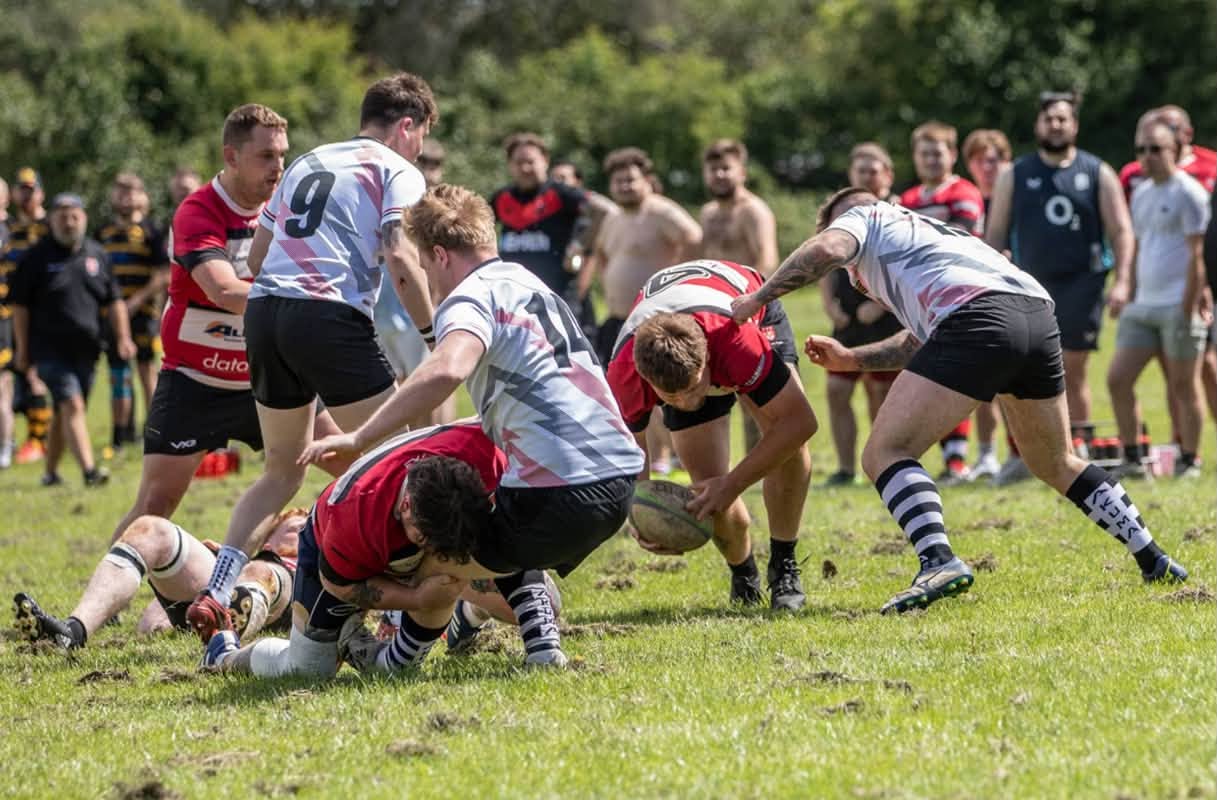
Early pre-season hamstring strains: what can teams learn?
Why progressive sprint exposure, consistent strength work and a genuine return-to-rugby process matter.
Pre-season rugby places several new demands on the body at the same time. Players may return to repeated sprinting, acceleration, deceleration, kicking and changes of direction after a period in which their exposure to these movements has been limited.
The hamstrings must cope with many of these demands, particularly during faster running. This is why hamstring strains deserve their own discussion rather than being treated as a brief addition to a general article on muscle injuries.
Research in English professional rugby found that although only 22% of training took place during pre-season, 34% of training injuries were sustained during that period. Hamstring injuries were among the commonly reported muscle injuries.1
Key points
- Previous hamstring injury increases the risk of another strain.
- Steady conditioning does not fully prepare a player for sprinting.
- High-speed running should be introduced progressively.
- Hamstring strengthening should continue throughout pre-season.
- Pain-free jogging does not necessarily mean a player is ready for rugby.
What are the hamstrings?
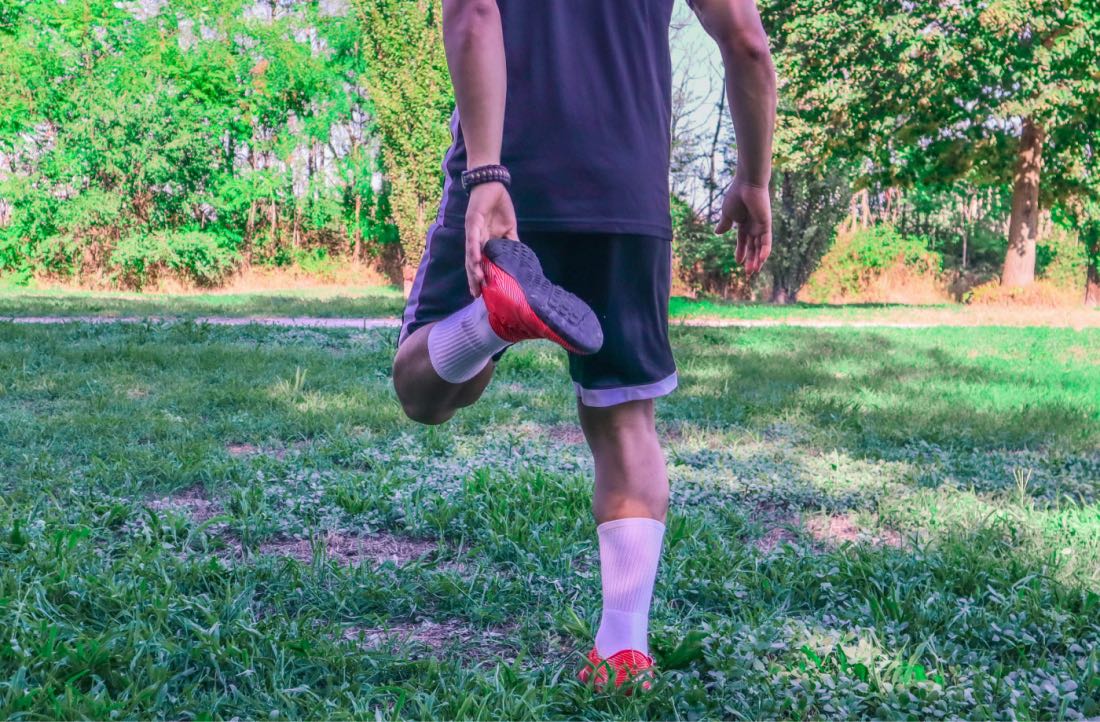
The hamstrings are a group of muscles at the back of the thigh. They help bend the knee, extend the hip and control the leg during running.
During high-speed running, the hamstrings work particularly hard as the leg swings forwards. They help slow the lower leg before the foot reaches the ground and then contribute to force production during the next stride.2
In rugby, this demand may occur when a player is:
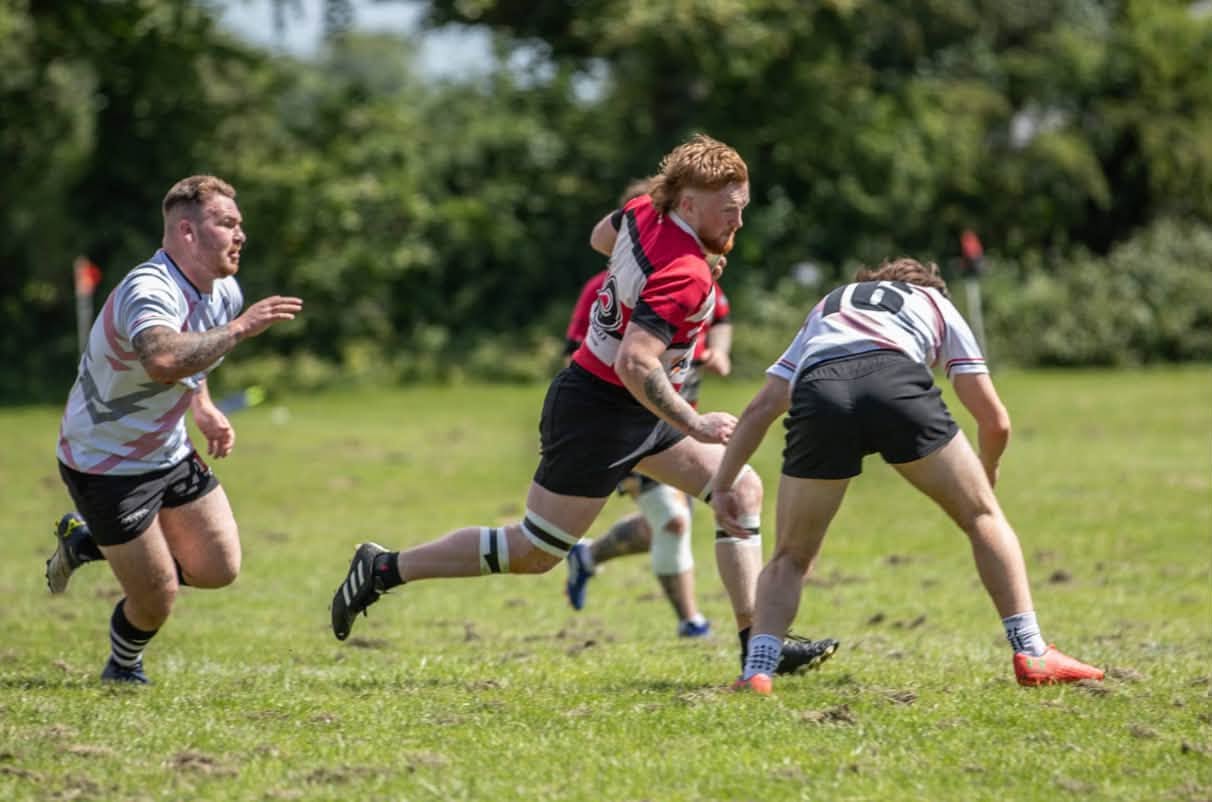
- accelerating into space;
- chasing or contesting a kick;
- recovering defensively;
- breaking from a standing start;
- changing direction;
- repeating sprints while fatigued; or
- kicking or reaching for a loose ball.
A player may therefore feel generally fit while still being insufficiently prepared for repeated rugby-speed running.
Why are hamstring strains important in rugby?
A study of professional rugby union reported a hamstring injury rate of 5.6 injuries per 1,000 player match-hours, compared with 0.27 per 1,000 player training-hours. The average injury caused 17 days of lost time. Recurrent injuries accounted for 23% of cases and were more severe, averaging 25 days lost compared with 14 days for a new injury.3
Those figures come from professional rugby, so they should not be treated as an exact prediction for every community club. They do, however, show why hamstring injuries can have a meaningful effect on player availability.
This does not mean training should avoid sprinting. Players need appropriate exposure to faster running so that their bodies can adapt to the speeds they will face in matches. The key is to build that exposure progressively rather than moving suddenly from steady conditioning to repeated near-maximum efforts.2, 7
Key message
Pre-season should prepare players for speed, not simply test whether they can already tolerate it.
Previous hamstring injury matters
One of the most important questions is whether the player has strained the hamstring before.
In a prospective study of 178 rugby union players, those with a previous hamstring injury had a 4.1-fold greater risk of another hamstring injury. Larger differences in eccentric knee-flexor strength between the two legs were also associated with increased risk.4
This does not mean every player with a previous strain will suffer another injury. It does mean that previous injury history should not be ignored when planning pre-season training.
Players returning after a previous hamstring problem may benefit from:
- a more gradual introduction to maximum-speed running;
- continued hamstring-strengthening work;
- attention to meaningful differences between the legs;
- early reporting of recurring tightness, weakness or discomfort; and
- additional preparation before repeated sprint sessions.
Simply asking whether the hamstring is currently painful may not tell us whether it is prepared for the demands of rugby.
What can teams learn?
1. Introduce high-speed running progressively
Jogging, steady running and general conditioning do not completely prepare the hamstrings for sprinting. Running intensity should increase progressively, beginning with controlled accelerations before moving towards faster efforts, longer sprint distances, repeated sprints and rugby-specific movement.
The progression will vary according to the player’s position, fitness, injury history and recent training exposure. A winger repeatedly sprinting into open space will face different running demands from a tight-head prop, but both may still need to accelerate suddenly during a match.
2. Keep strengthening consistent
Hamstring strengthening should not begin only after somebody becomes injured.
The Nordic hamstring exercise is one of the most researched exercises in this area. A systematic review involving 8,459 athletes found that injury-prevention programmes containing the Nordic hamstring exercise reduced hamstring injury rates by up to 51%.5
That finding supports including Nordic exercises within an appropriate programme. It does not mean that one exercise guarantees prevention or that every player should immediately perform the same volume.
A broader strengthening programme may include:
- Nordic hamstring progressions;
- bridges and single-leg bridges;
- hip-hinge exercises;
- Romanian deadlifts;
- hamstring sliders or curls;
- exercises that load the hamstrings at longer muscle lengths; and
- sprinting introduced at an appropriate intensity.
These exercises should be introduced and progressed sensibly. A large amount of unfamiliar eccentric work immediately before heavy running may create substantial soreness and fatigue rather than improving readiness.
3. Do not rely on stretching alone
A hamstring that feels tight is not necessarily a hamstring that simply needs to be stretched. The sensation may relate to fatigue, reduced strength, protective muscle activity, a previous injury, tendon irritation or pain referred from another area.
Stretching may form part of rehabilitation, but it should not be relied upon as the sole treatment. Current clinical guidance supports combining appropriate stretching, where indicated, with progressive strengthening, eccentric loading, trunk stabilisation and a graded return to running.6
Aggressive stretching is not automatically the correct response, particularly immediately after an acute strain.
4. Consider the whole movement chain
The hamstrings do not work in isolation. Running also depends on the strength and control of the hips, trunk, pelvis, knees, ankles and calves.
International hamstring experts reached strong agreement that the wider kinetic chain should be considered during rehabilitation.7
This may include addressing:
- hip and gluteal strength;
- trunk and pelvic control;
- running mechanics;
- calf capacity;
- acceleration and deceleration ability;
- general conditioning; and
- the player’s confidence when sprinting.
5. Encourage early reporting
Some hamstring strains occur suddenly, with a sharp pain or pulling sensation during a sprint. Others may begin with increasing tightness, a change in stride or a feeling that the player cannot accelerate normally.
Players should be encouraged to report these warning signs rather than trying to complete every repetition. Early reporting does not always mean removing somebody from all training. It may allow the session to be modified before a manageable problem becomes a more significant injury.
What can coaches do?
Coaches do not need to diagnose hamstring injuries, but they can influence how quickly sprinting is introduced, whether strength work is maintained and whether players feel able to report symptoms early.
- Ask about previous injury. A player with a previous hamstring strain may need a more gradual introduction to repeated sprinting and closer communication about recurring symptoms.
- Progress speed as well as distance. Build from controlled accelerations towards faster efforts, repeated sprints and rugby-specific running rather than assuming steady conditioning has prepared the player for maximum speed.
- Keep strength work regular. Use manageable, consistent exposure rather than suddenly adding a high volume of unfamiliar Nordic or other eccentric hamstring work.
- Plan demanding sessions sensibly. Consider the combined effect of sprinting, conditioning, gym work and rugby training rather than treating each element in isolation.
- Make reporting normal. A player who develops increasing tightness, changes their stride or cannot accelerate normally should be able to say so without feeling that they have failed the session.
- Use return-to-rugby criteria. Pain-free jogging is only an early step. Faster running, acceleration, deceleration, change of direction, kicking and full training should be restored as appropriate before match return.
These actions cannot prevent every hamstring strain, but they reflect the main evidence-based themes of previous-injury awareness, progressive exposure, consistent strengthening and criteria-based return to sport.4, 5, 7
Should an injured player simply rest?
Rest may settle the initial pain, but rest alone does not rebuild the hamstring’s ability to sprint.
Rehabilitation should progressively restore strength, movement, running capacity and confidence. International expert consensus recommends individualising rehabilitation according to the athlete, the involved muscle, the type and severity of injury and the demands of the sport.7
Early rehabilitation should avoid excessive strain and very rapid loading. As the player improves, loading and running should be reintroduced according to symptoms and capacity. Progression criteria are more useful than returning a player simply because a predetermined number of days has passed.7
Returning to jogging is not returning to rugby
A player may be able to jog comfortably while remaining unprepared for:
- maximum-speed running;
- repeated acceleration;
- sudden deceleration;
- changing direction;
- kicking;
- fatigue;
- unplanned movements; and
- match-intensity effort.
Pain-free sprinting is an important part of rehabilitation before return to sport. The final decision should consider whether the player has restored the capacity required for training and match play, rather than relying only on pain during walking or slow running.7
Return-to-rugby principle
The aim is not simply to get the player back onto the pitch quickly. It is to return the player with enough preparation to tolerate the demands of rugby.
Not every pain behind the thigh is a hamstring strain
Pain at the back of the thigh is not always caused by a straightforward muscle strain. Other possibilities include hamstring tendon problems, referred pain from the lower back, irritation involving the sciatic nerve or a more significant tendon injury.2, 6
Prompt assessment is particularly important when there is:
- a sudden pop or tearing sensation;
- significant bruising or swelling;
- difficulty walking;
- marked weakness;
- pain close to the sitting bone;
- numbness, tingling or pain extending below the knee;
- a suspected recurrence of a previous injury; or
- symptoms that do not begin to improve as expected.
A proper assessment can help identify the structures involved and guide an appropriate rehabilitation plan.

How Resilience Osteopathy may support a hamstring problem
A hamstring assessment may include discussing how the injury occurred, previous injuries, current symptoms and the demands of the player’s position and training. Movement, strength and functional tasks may be assessed where appropriate.
Care may include advice, load management, hands-on osteopathic treatment and rehabilitation exercises tailored to the individual. Where a more significant injury, tendon injury or another cause of posterior-thigh pain is suspected, the player may be advised to seek medical review or further investigation.
The wider lesson for teams
Hamstring strains are not always preventable, and their occurrence should not automatically be blamed on the player, coach or training programme.
They are influenced by several interacting factors, including previous injury, exposure to sprinting, strength, fatigue, training load and the demands placed on the individual player.
Teams can nevertheless reduce avoidable risk by preparing players progressively, maintaining hamstring strength, identifying previous injury history and ensuring that injured players complete a genuine return-to-rugby progression.
The aim of pre-season should not be to avoid hard training. It should be to build the physical capacity that allows players to tolerate hard training and, ultimately, match-day rugby.
This article provides general information and does not replace an individual medical or musculoskeletal assessment. A player with severe pain, substantial weakness, significant bruising, neurological symptoms or concern about a more serious injury should seek appropriate medical assessment.
About the author
David Hanaie M.Ost is a registered osteopath and provides pitch-side and rehabilitation support within rugby. He works with patients experiencing sports injuries, musculoskeletal pain and difficulties returning to exercise.
Resilience Osteopathy
Orpington, Kent
References
- Brooks JHM, Fuller CW, Kemp SPT, Reddin DB. Epidemiology of injuries in English professional rugby union: part 2: training injuries. Br J Sports Med. 2005;39(10):767-775. doi:10.1136/bjsm.2005.018408. DOI link
↩︎ - Heiderscheit BC, Sherry MA, Silder A, Chumanov ES, Thelen DG. Hamstring strain injuries: recommendations for diagnosis, rehabilitation, and injury prevention. J Orthop Sports Phys Ther. 2010;40(2):67-81. doi:10.2519/jospt.2010.3047. DOI link ↩︎
- Brooks JHM, Fuller CW, Kemp SPT, Reddin DB. Incidence, risk, and prevention of hamstring muscle injuries in professional rugby union. Am J Sports Med. 2006;34(8):1297-1306. doi:10.1177/0363546505286022. DOI link ↩︎
- Bourne MN, Opar DA, Williams MD, Shield AJ. Eccentric knee flexor strength and risk of hamstring injuries in rugby union: a prospective study. Am J Sports Med. 2015;43(11):2663-2670. doi:10.1177/0363546515599633. DOI link ↩︎
- van Dyk N, Behan FP, Whiteley R. Including the Nordic hamstring exercise in injury prevention programmes halves the rate of hamstring injuries: a systematic review and meta-analysis of 8,459 athletes. Br J Sports Med. 2019;53(21):1362-1370. doi:10.1136/bjsports-2018-100045. DOI link ↩︎
- Martin RL, Cibulka MT, Bolgla LA, et al. Hamstring strain injury in athletes: clinical practice guidelines linked to the International Classification of Functioning, Disability and Health. J Orthop Sports Phys Ther. 2022;52(3):CPG1-CPG44. doi:10.2519/jospt.2022.0301. DOI link ↩︎
- Paton BM, Read P, van Dyk N, et al. London International Consensus and Delphi study on hamstring injuries part 3: rehabilitation, running and return to sport. Br J Sports Med. 2023;57(5):278-291. doi:10.1136/bjsports-2021-105384. DOI link ↩︎

Why people choose Resilience Osteopathy

Focused on you
osteopath in Orpington
Your symptoms, concerns, work, sport and daily activity all matter. Care is tailored to you and your individual goals.

Hands-on
osteopathic treatment
Treatment may include hands-on techniques to support comfort, mobility and movement, depending on your assessment findings.

Read about
running injury treatment
Find out more about osteopathic care for running injuries in Orpington and what treatment may include.

Assessment and diagnosis
where appropriate
Your appointment includes a case history and physical assessment to help understand what may be contributing to your symptoms.