
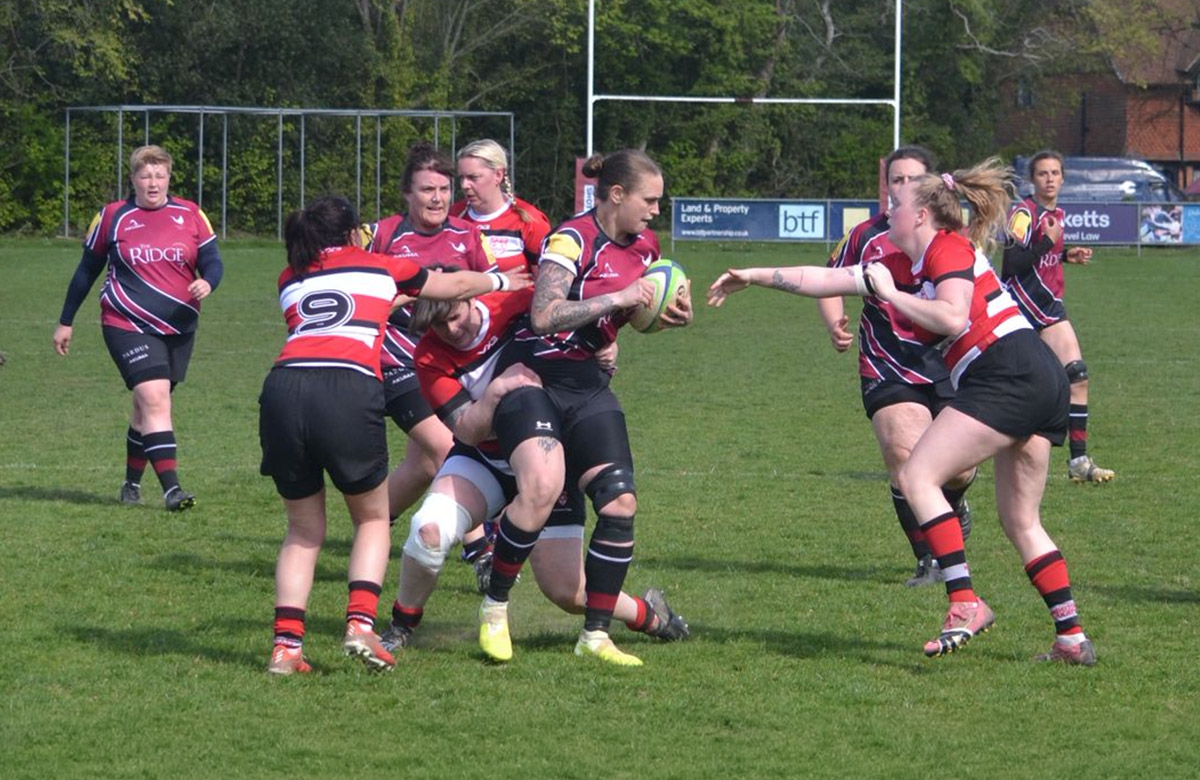
Why are ACL injuries more common in women’s rugby?
An anterior cruciate ligament injury can happen in a fraction of a second.
A rugby player may plant her foot to sidestep, land awkwardly after competing for the ball or be knocked off balance while being tackled. Her foot remains on the ground as the knee and body turn, placing considerable strain through the joint.
Research across team sports has found that female athletes experience anterior cruciate ligament injuries at just over twice the rate of male athletes.1 However, this does not mean that women’s knees are simply weaker.
The difference appears to involve several interacting factors, including knee anatomy and alignment, movement and muscle control, training history, rugby contact, hormones and the sporting environment. Importantly, no single factor can reliably predict which player will suffer an ACL injury.
What is the ACL?
The anterior cruciate ligament, usually shortened to ACL, is a strong band of tissue inside the knee.
It connects the thigh bone to the shin bone and helps control forwards movement and rotation of the shin. It is particularly important during movements such as:
- sidestepping;
- landing;
- suddenly slowing down;
- turning with the foot planted;
- tackling; and
- being tackled.
An ACL injury may be a partial tear or a complete rupture. Other parts of the knee, including the meniscus – the shock-absorbing cartilage within the joint – may be injured at the same time.
Are ACL injuries more common in women’s rugby?
The best available evidence indicates that ACL injuries occur more frequently in female athletes than male athletes participating in comparable team sports. One systematic review found a rate approximately 2.15 times higher among female players.1
However, this figure was calculated across several sports rather than from rugby alone. Research specifically comparing ACL injury rates in male and female rugby players remains more limited.
What rugby research does show is that ACL injuries can have a considerable effect on players and teams.
In an Irish amateur rugby study, ACL injuries produced the greatest injury burden for both men and women. Injury burden describes the combined effect of how frequently an injury happens and how much playing and training time it causes players to miss. The burden was higher among the women included in that particular study.2
A separate study of elite women’s rugby in England reported an ACL injury rate of 0.4 injuries per 1,000 match hours. Although ACL injuries were relatively uncommon, the average time lost was 288 days.3
This helps explain why ACL injuries receive so much attention: they may not be the most frequent rugby injury, but they can result in a lengthy absence.
Why might ACL risk differ?
There is no single accepted explanation. The most accurate answer is that several biological, physical and environmental factors may interact.
1. Rugby combines turning, speed and contact
ACL injuries are sometimes described as either non-contact or contact injuries.
A non-contact injury does not involve a direct blow to the knee. It may happen when a player:
- plants her foot while sidestepping;
- lands with insufficient control;
- turns while the foot remains fixed; or
- suddenly slows down.
A contact injury may involve a direct impact to the knee. It may also involve contact elsewhere on the body that pushes or rotates the player while her foot remains trapped on the ground.
A video study of 36 ACL injuries in professional men’s rugby found that 57% involved contact. Two prominent situations were offensive running and being tackled, suggesting that the ball carrier may be particularly exposed.4
This study involved male professional players, so it should not automatically be assumed that the findings are identical in women’s rugby. It does show, however, that rugby ACL injuries cannot be explained only by landing technique or knee position. Contact and unpredictable match situations also matter.
2. Knee anatomy and alignment may contribute
No two knees are built in exactly the same way.
Researchers have identified several anatomical features that may be associated with ACL injury risk. These include:
- the size of the ACL;
- the amount of space surrounding it within the knee;
- the shape of the thigh and shin bones;
- the slope at the top of the shin bone; and
- the alignment of the hip, kneecap and shin.5
One alignment measurement sometimes discussed is the quadriceps angle, usually shortened to the Q-angle.
The Q-angle is formed by an imaginary line running from the front of the pelvis to the centre of the kneecap and another line running from the kneecap to the upper shin.
Women have been reported to have a larger Q-angle on average. This has been proposed as one anatomical factor that could influence forces and movement around the knee. However, the relationship between Q-angle and ACL injury remains uncertain, and a larger Q-angle alone cannot reliably predict which player will sustain an ACL injury.6 7
A static Q-angle measured while a player is standing or lying down should not be confused with dynamic knee valgus.
Dynamic knee valgus describes the knee moving and loading inwards while a player lands, brakes or changes direction. This movement is influenced by several factors, including:
- natural anatomy;
- muscle strength;
- technique;
- trunk position;
- speed;
- fatigue; and
- whether the movement is planned or reactive.
Prospective research has associated greater inward knee loading during landing with a later ACL injury in female athletes.8 However, this does not prove that a player’s static Q-angle caused the injury or that every visible inward movement of the knee is dangerous.
Anatomy may contribute to risk, but it is only one part of a much larger picture.
3. Movement and muscle control may differ
When a player lands, cuts or slows down, the muscles around the trunk, hips, knees and ankles must work together to control the forces passing through the leg.
Research has identified average differences in how male and female athletes land, brake and change direction. These may include differences in:
- hip and knee bending;
- trunk position;
- inward movement of the knee;
- foot placement; and
- how the player brakes before turning.9
However, it would be too simplistic to conclude that women naturally move incorrectly.
These patterns may also be influenced by strength, sporting experience, coaching, fatigue and the task being performed.
A 2024 systematic review found some differences in body position during changes of direction but did not find clear overall differences in the measured knee-joint loads. The researchers also noted that factors such as strength, playing skill and training experience were often not adequately considered.9
Movement patterns are not fixed. Strength, braking ability, landing control and sidestepping technique can all be trained.
4. Strength and preparation influence how force is managed
Strength does not make an ACL injury impossible. It does, however, help the muscles absorb and control the forces created during running, landing, contact and changes of direction.
Useful physical qualities include:
- quadriceps and hamstring strength;
- calf strength;
- hip and gluteal strength;
- trunk control;
- single-leg balance;
- jumping and landing ability;
- braking strength; and
- the ability to change direction efficiently.
These qualities need to be developed progressively. Completing general fitness training or long-distance running does not necessarily prepare a player for rapid sidestepping, repeated collisions or landing unexpectedly on one leg.
5. The sporting environment also matters
Discussions about ACL injuries have traditionally focused heavily on the female body. More recent research suggests that this is incomplete.
Injury risk may also be influenced by whether players have consistent access to:
- knowledgeable strength and conditioning support;
- suitable training facilities;
- appropriately designed injury-reduction programmes;
- rehabilitation and medical services;
- progressive exposure to contact;
- sufficient preparation before competition; and
- coaches who understand the demands of the women’s game.
The International Olympic Committee’s 2025 FAIR consensus emphasised that athlete health and injury prevention are shared responsibilities. Players, coaches, healthcare practitioners, clubs, governing bodies and sporting organisations all have a role.10
Research supporting the consensus also identified issues such as unequal organisational support, limited access to resources, gaps in staff knowledge and inconsistent implementation of suitable injury-prevention programmes.11
The higher ACL injury rate should therefore not be treated as though it is solely a problem with the individual player’s body.
6. What role do hormones and the menstrual cycle play?
Hormones are often presented as the main explanation for ACL injuries in women. The evidence is much less certain.
Hormones such as oestrogen may affect ligament tissue, muscle function and joint laxity – the amount of movement or looseness within a joint.
Some studies have reported changes in knee laxity or movement patterns at different stages of the menstrual cycle. However, these findings have not been consistent, and it remains unclear whether they translate into a meaningful change in ACL injury risk.12
A systematic review examining menstrual-cycle phase and measurements associated with ACL injury risk included only seven suitable studies. Four found no significant differences between phases, and the overall quality of the evidence was rated low or very low.12
At present, there is not enough reliable evidence to identify a predictable ACL “danger phase”. Players should not be told that they must avoid normal training or competition during a particular part of their menstrual cycle.
Cycle tracking may still help an individual player understand changes in symptoms, energy, sleep or recovery. That is different from claiming that it can predict an ACL injury.
Can ACL injuries be prevented?
No programme can guarantee that a player will avoid an ACL injury, particularly in a collision sport such as rugby. However, appropriately designed exercise programmes can reduce the rate of ACL injuries across groups of female athletes.10 13
The 2025 FAIR consensus supports the use of neuromuscular warm-up programmes. Neuromuscular training means exercises that improve how the nervous system and muscles work together to control movement.10
A useful programme normally includes a combination of:
- strength exercises;
- jumping and controlled landing;
- single-leg balance;
- acceleration and deceleration;
- agility and changes of direction; and
- progressive rugby-specific movement.
Research informing the FAIR consensus found high-certainty evidence that neuromuscular warm-up programmes can reduce ACL injury rates in female athletes, although the degree of risk reduction varies between studies and sporting populations.13
The most effective programme is one that players complete consistently. A few exercises performed occasionally are unlikely to provide the same benefit as structured training carried out throughout pre-season and the competitive season.
The exercises should also become progressively more challenging. Players need to develop control during faster, less predictable and more rugby-specific situations rather than only during slow exercises in a straight line.
What can players do in practice?
Female rugby players can improve their preparation by:
- completing structured lower-body strength training;
- practising landing and stopping under control;
- learning to brake before changing direction;
- developing strength on both legs;
- practising sidestepping from either side;
- building sprinting, jumping and contact exposure gradually;
- maintaining injury-reduction exercises during the season;
- reporting knee pain, swelling or instability early; and
- avoiding a sudden return to full matches after a long break.
Players returning from injury or a prolonged period away from rugby may need several stages of preparation before they are ready for unrestricted competition.
Being pain-free during normal walking is not the same as being ready to sprint, sidestep, tackle and tolerate match contact.
What are the possible signs of an ACL injury?
A player with an ACL injury may experience:
- a popping or snapping sensation;
- sudden knee pain;
- rapid swelling;
- difficulty continuing to play;
- difficulty putting weight through the leg;
- a feeling that the knee has given way; or
- later instability when turning or changing direction.
These symptoms are not exclusive to an ACL injury. Meniscal injuries, fractures, kneecap dislocations and injuries to other knee ligaments can produce similar symptoms.
A suspected ACL injury therefore needs a proper assessment rather than being diagnosed from symptoms alone.
When should a player seek medical help?
Stop playing and seek prompt assessment if the knee becomes significantly painful, swollen or unstable after an injury.
Contact NHS 111, an urgent treatment centre or another appropriate healthcare service urgently if:
- you cannot put weight through the leg;
- the knee is badly swollen;
- the knee has changed shape;
- the knee is locked and cannot fully straighten;
- the knee repeatedly gives way;
- the knee is hot and red and you also feel feverish or unwell; or
- you develop numbness, pins and needles or altered sensation in the leg below the injured knee. 14 15
A visibly deformed knee, loss of sensation or signs of a serious injury require emergency assessment.
Do not attempt to “run off” a knee injury that has caused rapid swelling, instability or an inability to continue playing.
Does every ACL injury require surgery?
No.
Some ACL injuries are managed with rehabilitation alone. Others may require ACL reconstruction followed by rehabilitation.16
The decision depends on several factors, including:
- the degree of instability;
- whether other knee structures are injured;
- the player’s normal activities;
- the demands of her playing position;
- whether the knee continues to give way; and
- her goals for returning to rugby.
Rehabilitation is important whether or not surgery is performed. Decisions about surgery should be made with an appropriately qualified knee specialist and rehabilitation team. Read more about knee rehabilitation exercises.
Where might osteopathic care fit?
An Orpington osteopath can assess musculoskeletal symptoms, movement, strength and function and can advise whether further medical investigation or referral appears necessary.
Hands-on treatment cannot repair a ruptured ACL, but an osteopath can assess a suspected ligament injury, examine knee stability and function, and advise on appropriate rehabilitation or referral.
Where the examination suggests a significant ACL injury, associated damage or the need for imaging or specialist opinion, referral to a GP, sports doctor, orthopaedic specialist or urgent care service may be appropriate.
For information about assessment, exercise guidance and return-to-sport support for suitable musculoskeletal injuries, see the Sports Injury Treatment in Orpington page.

Concerned about a knee injury?
If you’ve injured your knee or are experiencing pain, swelling or instability, learn more about sports injury treatment in Orpington or book an appointment for an individual assessment.
The key message
ACL injuries appear to occur more frequently in female team-sport athletes, but there is no single reason why.
The difference is likely to involve an interaction between:
- rugby’s contact and change-of-direction demands;
- knee anatomy and alignment;
- strength and movement control;
- training exposure;
- hormones;
- playing conditions; and
- access to appropriate sporting and medical support.
The Q-angle may be one small part of the anatomical picture, but it cannot reliably predict whether a player will injure her ACL.
It is also inaccurate to blame ACL injuries entirely on periods, hormones or the idea that women have naturally weak knees or naturally move incorrectly.
Some factors cannot be changed, but many aspects of physical preparation can be improved. Consistent strength, landing, braking and rugby-specific movement training can reduce risk, although no programme can remove it completely.
About the author
David Hanaie M.Ost is a registered osteopath and provides pitch-side and rehabilitation support within rugby. He works with patients experiencing sports injuries, musculoskeletal pain and difficulties returning to exercise.
Resilience Osteopathy
Orpington, Kent
References
- Zech A, Hollander K, Junge A, Steib S, Groll A, Heiner J, et al. Sex differences in injury rates in team-sport athletes: a systematic review and meta-regression analysis. J Sport Health Sci. 2022;11(1):104-114. doi:10.1016/j.jshs.2021.04.003. ↩︎
- Yeomans C, Kenny IC, Cahalan R, Warrington GD, Harrison AJ, Purtill H, et al. Injury trends in Irish amateur rugby: an epidemiological comparison of men and women. Sports Health. 2021;13(6):540-547. doi:10.1177/1941738121997145. ↩︎
- Starling LT, Gabb N, Williams S, Kemp S, Stokes KA. Longitudinal study of six seasons of match injuries in elite female rugby union. Br J Sports Med. 2023;57(4):212-217. doi:10.1136/bjsports-2022-105831. ↩︎
- Montgomery C, Blackburn J, Withers D, Tierney G, Moran C, Simms C. Mechanisms of ACL injury in professional rugby union: a systematic video analysis of 36 cases. Br J Sports Med. 2018;52(15):994-1001. doi:10.1136/bjsports-2016-096425. ↩︎
- Kaarre J, Ahrendt G, Giusto JD, Özbek EA, Apseloff NA, Musahl V. The effect of bony morphology on anterior cruciate ligament injury and surgery. Acta Orthop Traumatol Turc. 2024;58(2):83-88. doi:10.5152/j.aott.2024.24005. ↩︎
- Gant H, Ghimire N, Min K, Musa I, Ashraf M, Lawan A. Impact of the quadriceps angle on health and injury risk in female athletes. Int J Environ Res Public Health. 2024;21(12):1547. doi:10.3390/ijerph21121547. ↩︎
- Smith TO, Hunt NJ, Donell ST. The reliability and validity of the Q-angle: a systematic review. Knee Surg Sports Traumatol Arthrosc. 2008;16(12):1068-1079. doi:10.1007/s00167-008-0643-6. ↩︎
- Hewett TE, Myer GD, Ford KR, Heidt RS Jr, Colosimo AJ, McLean SG, et al. Biomechanical measures of neuromuscular control and valgus loading of the knee predict anterior cruciate ligament injury risk in female athletes: a prospective study. Am J Sports Med. 2005;33(4):492-501. doi:10.1177/0363546504269591. ↩︎
- Donelon TA, Edwards J, Brown M, Jones PA, O’Driscoll J, Dos’Santos T. Differences in biomechanical determinants of ACL injury risk in change of direction tasks between males and females: a systematic review and meta-analysis. Sports Med Open. 2024;10:29. doi:10.1186/s40798-024-00701-z. ↩︎
- Crossley KM, Whittaker JL, Patterson B, Shill IJ, Heming EE, Bullock GS, et al. Female, woman and/or girl Athlete Injury pRevention (FAIR) practical recommendations: International Olympic Committee consensus meeting held in Lausanne, Switzerland, 2025. Br J Sports Med. 2025;59(22):1546-1559. doi:10.1136/bjsports-2025-110889. ↩︎
- Crossley KM, Haberfield MJ, Ross AG, Gracias LJ, Bruder AM, Whittaker JL, et al. Gender- and/or sex-specific considerations for sport-related injury: a concept mapping approach for the Female, woman and/or girl Athlete Injury pRevention consensus. Br J Sports Med. 2025;59(22):1560-1574. doi:10.1136/bjsports-2025-109946. ↩︎
- Dos’Santos T, Stebbings GK, Morse C, Shashidharan M, Daniels KAJ, Sanderson A. Effects of the menstrual cycle phase on anterior cruciate ligament neuromuscular and biomechanical injury risk surrogates in eumenorrheic and naturally menstruating women: a systematic review. PLoS One. 2023;18(1):e0280800. doi:10.1371/journal.pone.0280800. ↩︎
- Bullock GS, Räisänen AM, Martin C, Martin M, Galarneau JM, Whittaker JL, et al. Prevention strategies for lower extremity injury: a systematic review and meta-analyses for the Female, woman and/or girl Athlete Injury pRevention consensus. Br J Sports Med. 2025;59(22):1575-1586. doi:10.1136/bjsports-2025-109910. ↩︎
- NHS. Knee pain [Internet]. London: National Health Service; [cited 2026 Aug 10]. ↩︎
- East Lancashire Hospitals NHS Trust. Traumatic knee injury [Internet]. Blackburn: East Lancashire Hospitals NHS Trust; [cited 2026 Aug 10]. ↩︎
- NHS. Why ACL (anterior cruciate ligament) surgery is done [Internet]. London: National Health Service; [cited 2026 Aug 10]. ↩︎
Why people choose Resilience Osteopathy

Hands-on
osteopath in Orpington
Your symptoms, concerns, work, sport and daily activity all matter. Care is tailored to you and your individual goals.

Hands-on
osteopathic treatment
Treatment may include hands-on techniques to support comfort, mobility and movement, depending on your assessment findings.

Read about
knee pain treatment
Find out more about osteopathic care for knee pain in Orpington and what treatment may include.

Assessment and diagnosis
where appropriate
Your appointment includes a case history and physical assessment to help understand what may be contributing to your symptoms.