
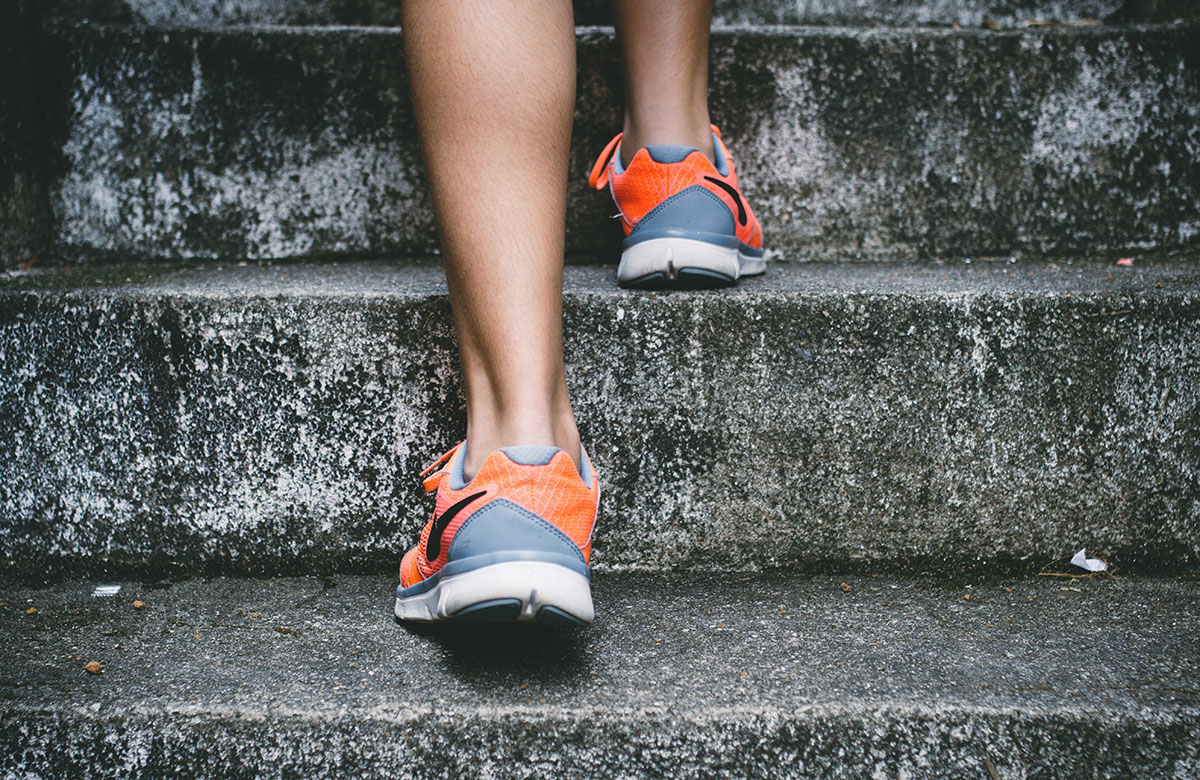
Are your trainers still supporting you? Why worn footwear could be contributing to your pain
Most people don’t think twice about replacing their trainers until there’s an obvious hole in them. From a clinical perspective, however, the important changes often happen long before they start to look worn.
As an Osteopath, one of the first things I often ask patients with foot, ankle, knee or even lower back pain is a surprisingly simple question:
“How old are your trainers?”
The answer is frequently, “I’ve had them for years.”
Why do trainers matter?
Every step you take places force through your feet, ankles, knees, hips and spine. Whether you’re running a marathon, walking the dog or standing all day at work, your footwear acts as the first point of contact with the ground.
Good trainers don’t simply provide cushioning. They also help provide stability, support natural movement and distribute forces more effectively throughout the lower limbs.
As trainers age, these protective features gradually begin to deteriorate – even if the shoe still looks perfectly acceptable from the outside.
It’s not just about the sole
Many people judge their trainers by the tread underneath.
While worn tread is important, it isn’t the only thing that matters.
Over time:
- Midsole cushioning compresses.
- Shock absorption reduces.
- Heel counters become softer.
- Stability decreases.
- The shoe may begin to lean to one side.
- Materials lose their ability to support the foot effectively.
These changes happen gradually, meaning most people simply adapt without realising their footwear is no longer performing as intended.
When should trainers be replaced?
There isn’t a single number that suits everyone.
As a general guide:
- Regular running shoes often perform best for around 300–500 miles (480–800 km).
- Walking trainers usually last longer but still lose support over time.
- Daily-use trainers worn for work or general activities can gradually lose their stability even if the soles still appear in reasonable condition.
Heavier individuals, those who spend long periods on their feet or people who regularly walk on harder surfaces may find their footwear wears out sooner.
Signs your trainers may need replacing
You don’t have to wait until they fall apart.
Some common signs include:
- The shoe rocks or leans when placed on a flat surface.
- The heel appears uneven.
- The midsole has visible creases or remains compressed.
- You notice uneven wear on the sole.
- New aches develop despite no obvious change in activity.
- The shoe feels less supportive than it once did.
Sometimes simply replacing worn trainers can significantly improve comfort.
Stability matters
Not everyone needs the same type of trainer.
Some people benefit from a neutral shoe, while others may require greater stability depending on their foot mechanics, previous injuries and individual needs.
Choosing a trainer should never be based solely on colour, price or brand.
The best trainer is the one that suits your feet and your activity.
Footwear is only one piece of the puzzle
Although footwear is important, it is rarely the sole cause of pain. As an Osteopath, I assess how the whole body moves.
Sometimes the issue lies in the foot itself. Other times the source may be higher up the chain, such as reduced ankle mobility, weakness around the hips, altered movement patterns or changes in training load.
Addressing these underlying factors is often just as important as replacing worn footwear.
Final thoughts
Replacing trainers isn’t just about comfort – it can be an important part of looking after your overall musculoskeletal health.
If you’ve been experiencing persistent pain in your feet, ankles, knees, hips or lower back, and your trainers have seen better days, it may be worth considering whether they’re still providing the support your body needs.
Combined with appropriate assessment, rehabilitation and the right advice, something as simple as changing your footwear can sometimes make a meaningful difference.
About the author
David Hanaie M.Ost is a Registered Osteopath and founder of Resilience Osteopathy in Orpington. He regularly assesses patients with foot, ankle, knee and lower limb conditions, helping them identify the underlying causes of pain and return to activity with confidence through evidence-informed osteopathic care and rehabilitation.
Why people choose Resilience Osteopathy

Focused on you
osteopath in Orpington
Your symptoms, concerns, work, sport and daily activity all matter. Care is tailored to you and your individual goals.

Hands-on
osteopathic treatment
Treatment may include hands-on techniques to support comfort, mobility and movement, depending on your assessment findings.

Read about
running injury treatment
Find out more about osteopathic care for running injuries in Orpington and what treatment may include.

Assessment and diagnosis
where appropriate
Your appointment includes a case history and physical assessment to help understand what may be contributing to your symptoms.